storage fit
Proxmox Storage Layout Checklist
Proxmox Storage Layout Checklist is a Proxmox storage planning page for deciding how Proxmox storage should handle VM disks, NAS data, redundancy, and backups.
Independent third-party notes. Verify critical homelab changes against primary docs and your exact hardware revision.
Quick Answer
Proxmox Storage Layout Checklist is a Proxmox storage planning page for deciding how Proxmox storage should handle VM disks, NAS data, redundancy, and backups. Before buying or changing the build, verify the risks below instead of trusting the headline spec.
Buyer verdict
Use this as a decision checkpoint before spending money.
Proxmox Storage Layout Checklist is a Proxmox storage planning page for deciding how Proxmox storage should handle VM disks, NAS data, redundancy, and backups.
- Best for
- NAS VM planning
- Avoid if
- Large enterprise storage design
- Biggest risk
- Do not store the only backup on the same host or same pool.
Proxmox Storage Layout Checklist should help you make a calmer decision. The point is not to make the homelab more complicated; it is to reveal the first thing that could make the build annoying, fragile, or hard to recover.
Choose your path
If this is your situation, start here
Beginner-safe default
Beginner-safe default
Choose the boring path first: known hardware details, one clear storage owner, console access for network changes, and a backup target outside the host.
- Exact SKU, NIC, and storage layout are recorded
- Rollback or restore path exists before the change
- The next step is small enough to test
Decision Score
Storage choices can change idle and sustained behavior.
Drive count and cooling affect placement.
This is the main reason to plan the page carefully.
NAS use still depends on the transfer path.
Friendly only when ownership and backups are explicit.
Upgrade Path
- Start with the simplest design that satisfies the current workload.
- Add complexity only after backups, restore tests, and network access are proven.
- Move to the next hardware or architecture class when the current constraint is measured, not guessed.
Key Facts
- Decision focus
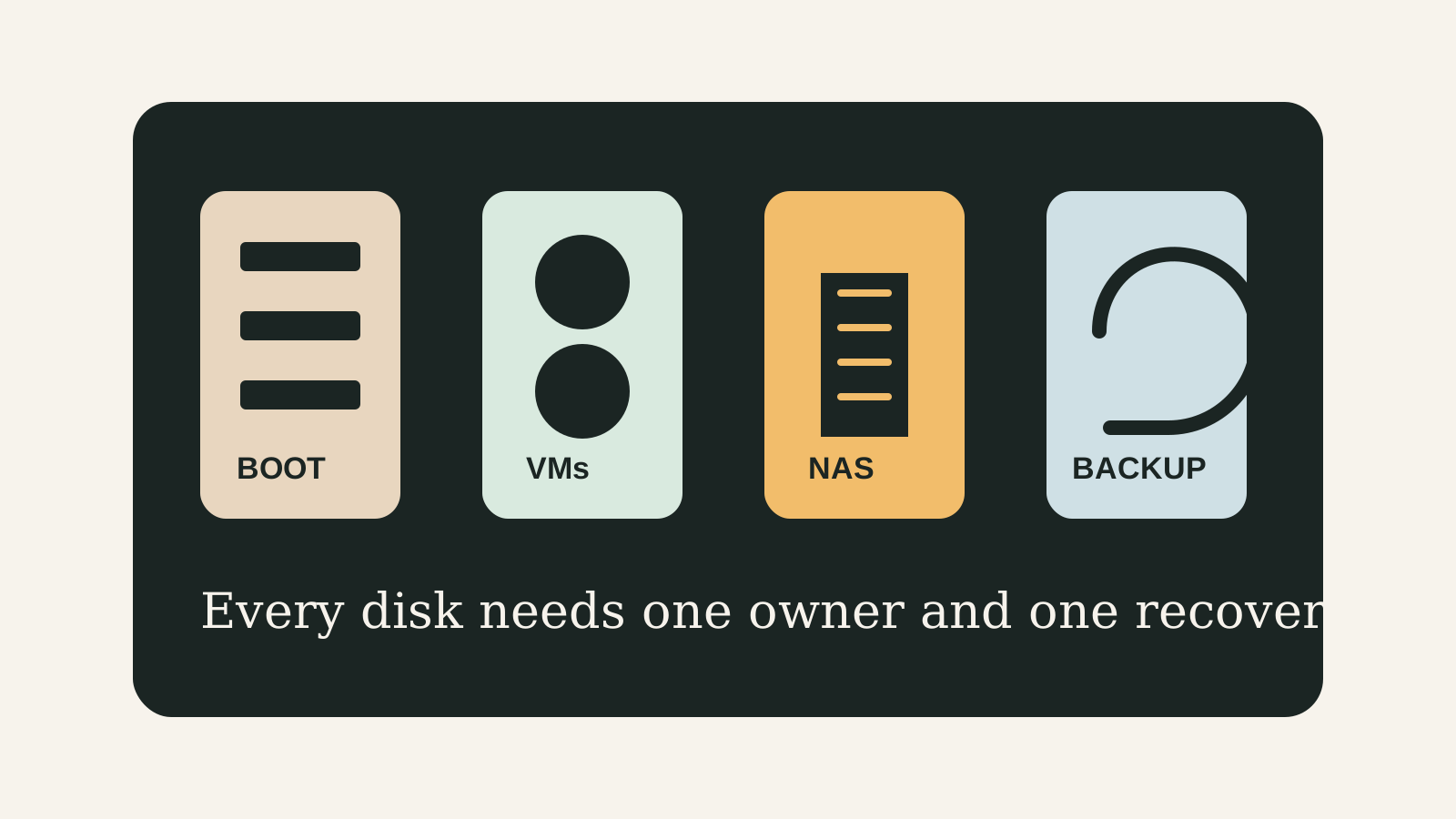
- Storage decisions should separate boot, VM disks, NAS data, backups, and restore workflow.
- Backup rule
- Redundancy, mirrors, RAID, and ZFS are not replacements for an off-host backup.
- Ownership rule
- Avoid letting Proxmox and a NAS VM manage the same disks at the same time.
- Best use
- choose local storage layout.
How to decide
| If this is true | Safer path | Pause when |
|---|---|---|
| The exact hardware details are known | Continue with the checklist | NIC, RAM, or storage details are missing |
| The setup will hold important data | Plan backup and restore first | Redundancy is being treated as backup |
| The design needs passthrough or VLANs | Document rollback before changing | You have no local console access |
| The goal is a first homelab | Keep the first version boring | The plan depends on too many untested assumptions |
Before You Buy
- List every disk and assign one owner or role to each device.
- Separate Proxmox boot storage, VM storage, NAS storage, and backup targets.
- Choose redundancy based on failure tolerance and restore plan, not only raw capacity.
Watch the traps
Most expensive beginner risks
- Do not store the only backup on the same host or same pool.
- External storage can be useful, but cabling and power stability must be considered.
Recommended Checks
- List every disk and assign one owner or role to each device.
- Separate Proxmox boot storage, VM storage, NAS storage, and backup targets.
- Choose redundancy based on failure tolerance and restore plan, not only raw capacity.
- Leave capacity and thermal headroom for sustained writes.
- Run a small backup and restore test before trusting important data.
Verification
- Every disk has a documented owner and role.
- The storage path matches the intended VM or NAS design.
- A restore test succeeds from an off-host backup.
Warnings
- Do not store the only backup on the same host or same pool.
- External storage can be useful, but cabling and power stability must be considered.
Best For
- NAS VM planning
- Mini PC storage design
- Homelab users before a reinstall
Not For
- Large enterprise storage design
- Users without a backup destination
- Copying another build without mapping disks
Common Beginner Traps
- Confusing redundancy with backup
- Mixing disk ownership
- Filling local storage without restore tests
Save this before checkout
Save this before acting
- Exact hardware details matter more than the product family name.
- Backups and rollback should exist before important changes.
- Unknown NIC, storage, or passthrough details are buying blockers.
- A simpler first build is usually easier to trust.
Examples
Boot disk:
VM storage:
NAS data:
Backup target:
Redundancy:
Restore test date:
FAQ
Is Proxmox Storage Layout Checklist beginner-friendly?
It can be, if you treat it as a checklist and verify the exact hardware, storage, network, and backup details before depending on it.
What should I verify first?
Start with the exact SKU or configuration, then check NIC, RAM, storage ownership, cooling, backups, and rollback.
What is the main trap?
Moving forward because the category sounds right while the exact failure mode is still unknown.
When should I pause?
Pause when the plan depends on unknown NIC behavior, unclear disk ownership, no backup target, or no way to recover from a bad change.
What should I read next?
Follow the reading path at the bottom of the page based on the first risk you found.
Sources
What to read next