storage fit
Proxmox ZFS RAM Requirements
Proxmox ZFS RAM Requirements is a Proxmox storage planning page for deciding how Proxmox ZFS should handle VM disks, NAS data, redundancy, and backups.
Independent third-party notes. Verify critical homelab changes against primary docs and your exact hardware revision.
Quick Answer
Proxmox ZFS RAM Requirements is a Proxmox storage planning page for deciding how Proxmox ZFS should handle VM disks, NAS data, redundancy, and backups.
Key Facts
- Decision focus
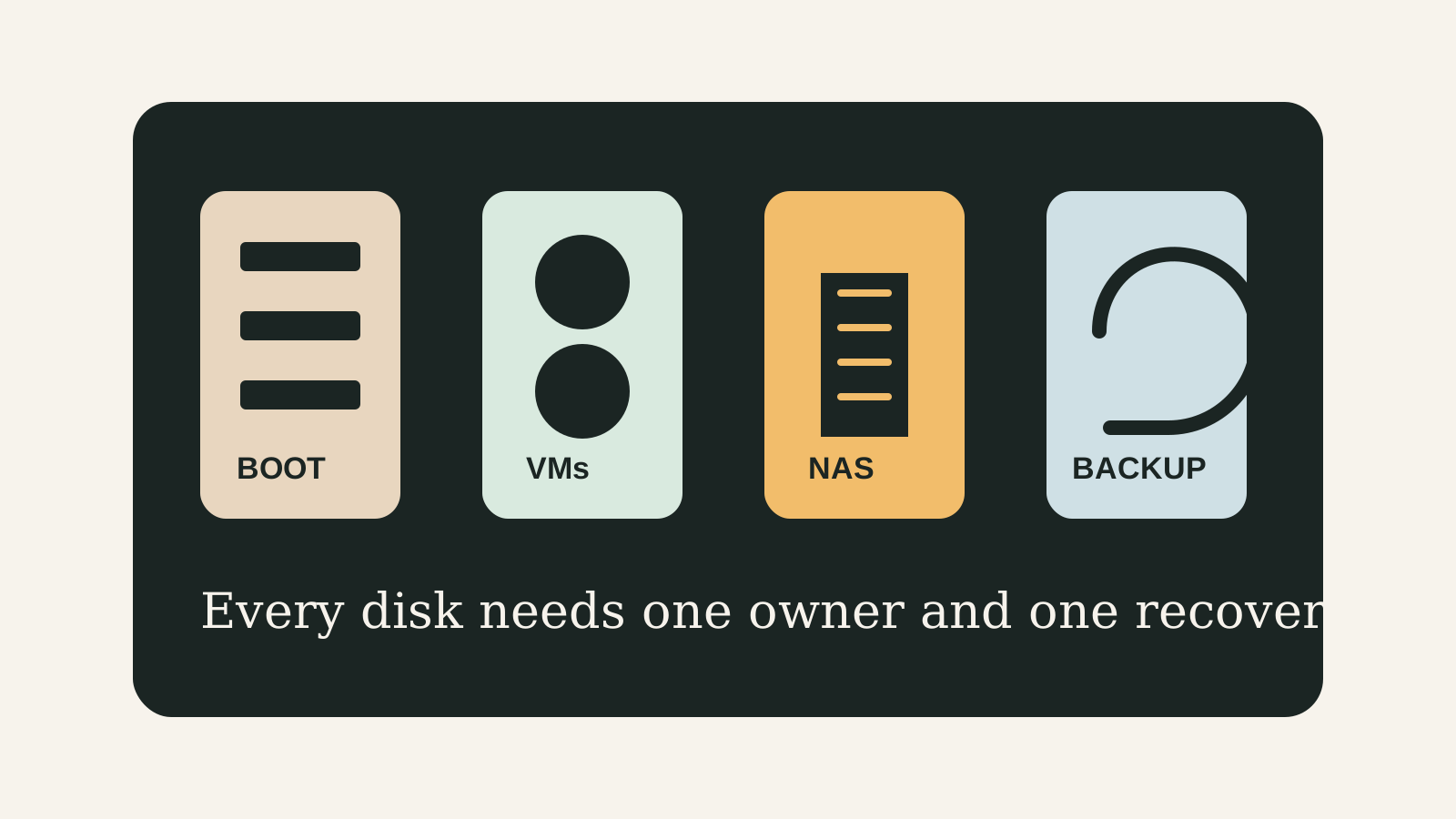
- Storage decisions should separate boot, VM disks, NAS data, backups, and restore workflow.
- Backup rule
- Redundancy, mirrors, RAID, and ZFS are not replacements for an off-host backup.
- Ownership rule
- Avoid letting Proxmox and a NAS VM manage the same disks at the same time.
- Best use
- estimate RAM for ZFS homelab.
Recommended Checks
- List every disk and assign one owner or role to each device.
- Separate Proxmox boot storage, VM storage, NAS storage, and backup targets.
- Choose redundancy based on failure tolerance and restore plan, not only raw capacity.
- Leave capacity and thermal headroom for sustained writes.
- Run a small backup and restore test before trusting important data.
Verification
- Every disk has a documented owner and role.
- The storage path matches the intended VM or NAS design.
- A restore test succeeds from an off-host backup.
Warnings
- Do not store the only backup on the same host or same pool.
- External storage can be useful, but cabling and power stability must be considered.
Best For
- NAS VM planning
- Mini PC storage design
- Homelab users before a reinstall
Not For
- Large enterprise storage design
- Users without a backup destination
- Copying another build without mapping disks
Common Beginner Traps
- Confusing redundancy with backup
- Mixing disk ownership
- Filling local storage without restore tests
Examples
Boot disk:
VM storage:
NAS data:
Backup target:
Redundancy:
Restore test date:
FAQ
What is the safest first storage decision?
Make disk ownership explicit and keep backups off the same host.
Should I optimize for performance first?
For a homelab NAS, recoverability and clarity usually matter before peak benchmark numbers.